Academic hiking; surveying the mountains on Mallorca

As close as possible to a real life Expedition Unknown adventure done academic style.
The art of surveying
Another summer meant another exciting archaeological fieldwork season on the sun-rich island of Mallorca for the Villa Son Sard project, kindly supported by L’Ajuntament de Son Servera and artist residence Can Pep Nebot. This year we continued working on the site itself through excavations and expanding our field surveys. Next to the on-site work, we also ventured outside its boundaries, conducting archaeological investigations on the mountaintops in the wider area. These extensive surveys resulted in exciting finds on the last years of Islamic settlement on the island, prehistoric megastructures and even prehistoric cave burials! Therefore, it is these surveys that I want to focus on here.
Some quick background information on how we conducted these surveys is definitely not uncalled for to better understand what and how we did this. These extensive surveys, called that for the literally extensive nature of the operation, were done by taking a broad investigation of an area to better understand what archaeological remains are present and provide insights for future more intensive archaeological work. The structure of these surveys was quite simple: we would roam around an area looking for any archaeological finds, such as pottery; when found we would search the surrounding area within approximately 2 meters for more; then bag our finds and stick a small flag near it so we could find it later and measure it in with our GPS system.
On some occasions we would implement a more intensive survey method, which we also use on the site itself, laying out squares of 5 by 5 meters, searching for any finds within the given square.
Puig des Moro
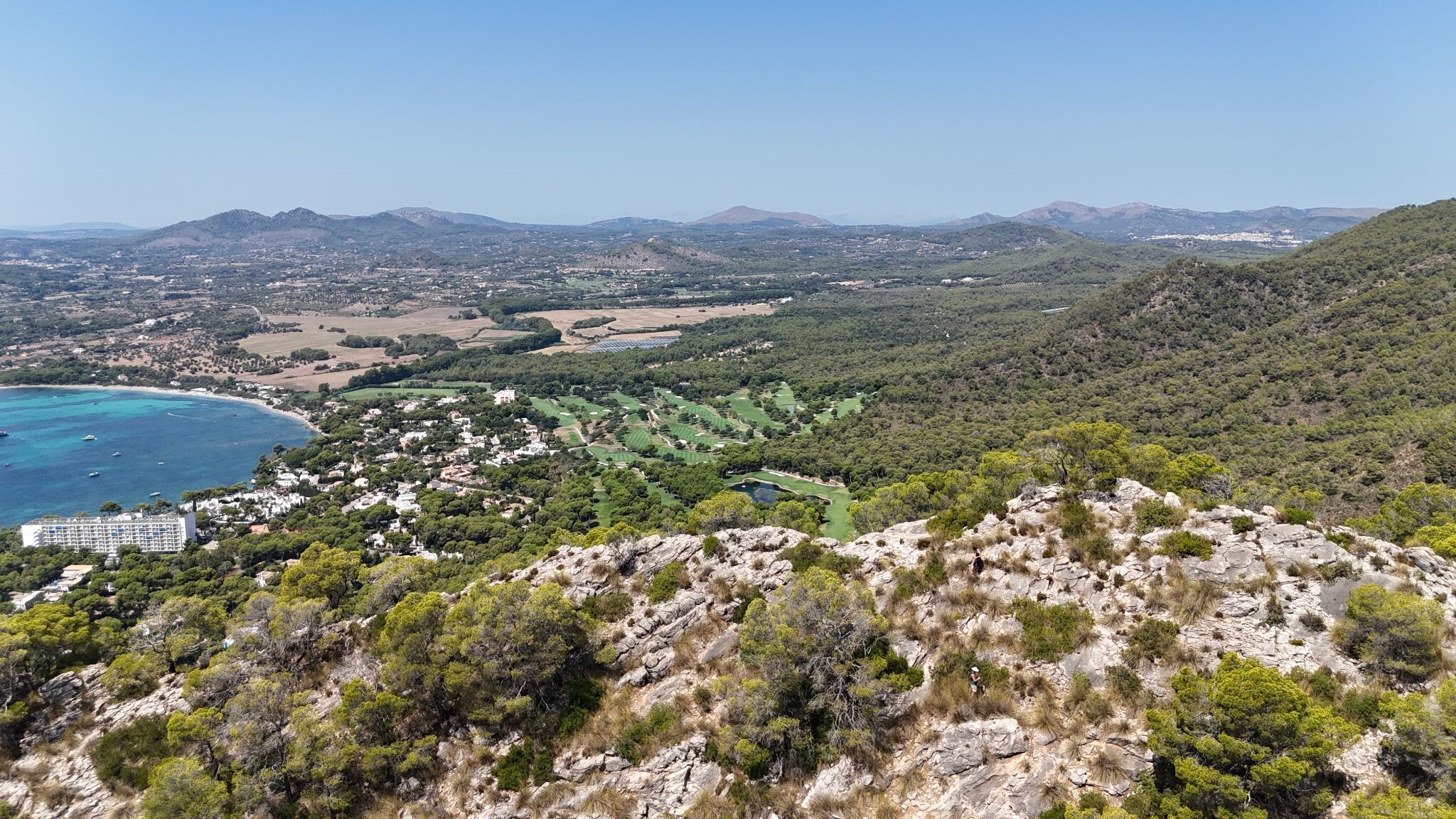
Our first extensive survey brought us to Puig des Moro, a mountain located on the edge of the same valley as our digging site. The reason behind our visit to the mountain was to investigate its possible use as a hiding place for the Islamic population of Mallorca during the Spanish invasion and subsequent conquest of the island between 1229 and 1231. Meaning that any archaeological evidence dating to the Islamic period we would find must have been from these three years. Quite a limited timeframe when it comes to archaeological work!
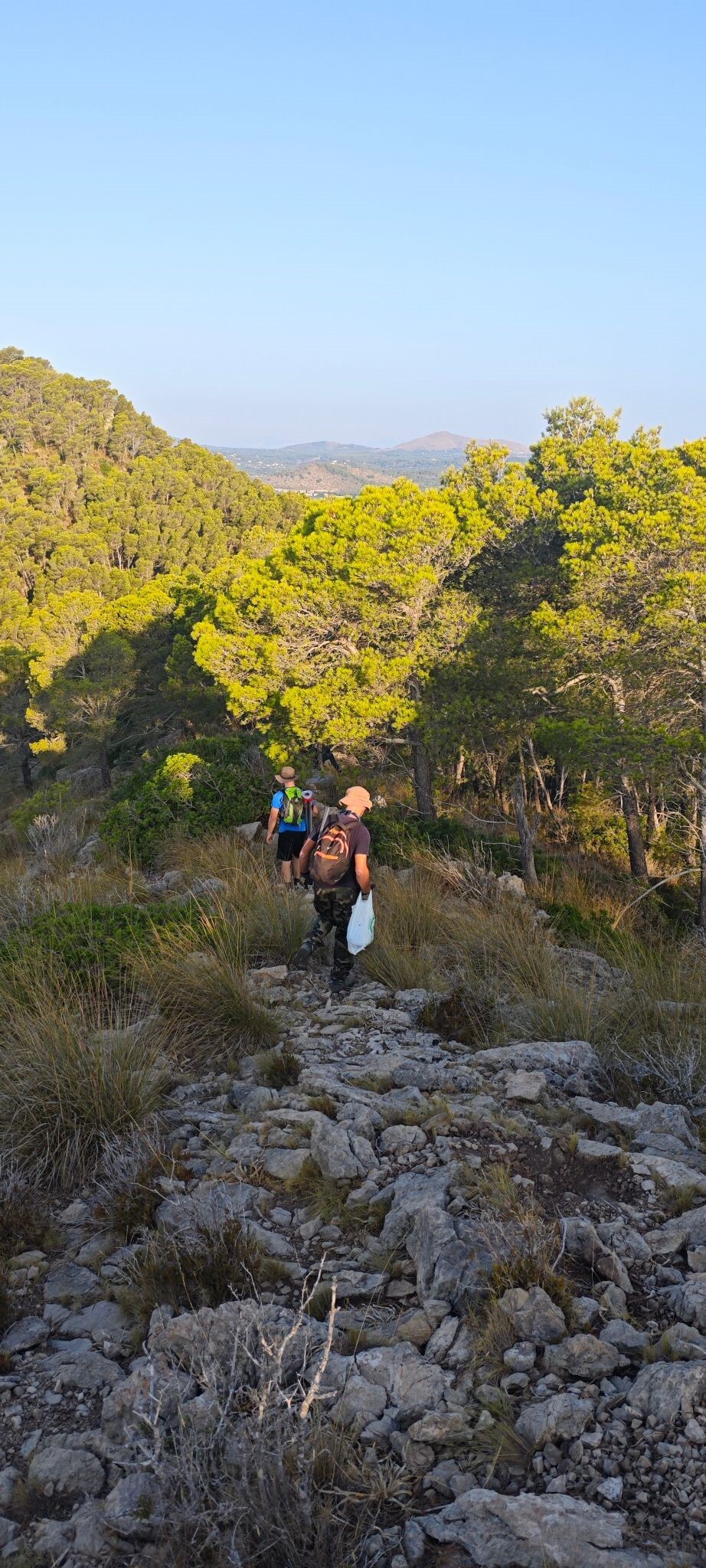
On the day itself we arrived early in the morning, climbing our way to the top carrying all the essentials from water to our GPS system. With no proper hiking trails available, it was quite the journey taking the better part of two hours climbing up the bush covered rocky mountainside. After setting up a basecamp on a flat area, we discovered that unfortunately we had forgotten the extra batteries for the GPS. Which meant that Filip and myself had to go back down, get the batteries from our house and back up again. In the meantime, the others started on the proper survey, climbing along one of the sides of the mountain least covered with trees and shrubs on the lookout of any archaeological material, but mainly pottery. When Filip and I returned back to the basecamp, we discovered that the others had already been really successful with the survey! Returning with plenty of filled bags of pottery sherds!
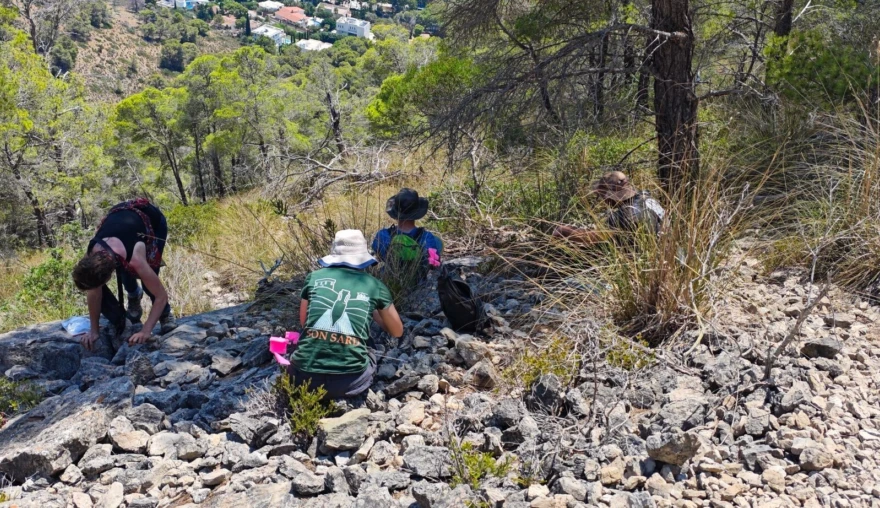
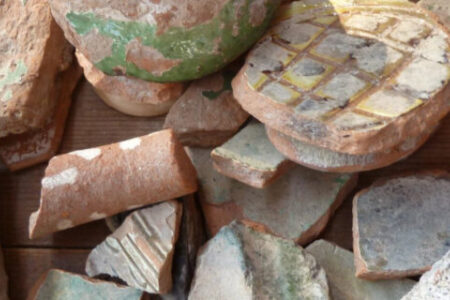
After a well-deserved lunch break it was my turn to scale the mountainside in search of even more archaeological finds! An experience I can only describe as an archaeological Easter egg hunt. After some irregular finds here and there, we came across a substantial rock slide, see picture 2 for reference, where in between all the rocks and pebbles there was an amazing number of Islamic period pottery sherds. The rest of our time on the mountain was spent here collecting as many sherds as would fit in our find bags, measuring in the find spots with the GPS as we went. In the end, we collected hundreds of sherds, some of which showed painted or inscribed decoration!
Puig Son Sard
Another mountain survey I want to mention is the one Ritchie and I did on Puig Son Sard. As the name suggests, this one is fairly close to our digging site. Similar to the other surveys, we arrived very early in the morning and again without a clear walking path we tried to scale it. However, this mountain was much more overgrown with scrubs and plants than Puig des Moro, making the climb almost impossible. After several attempts we almost gave up, but through some help from Toni, our Mallorcan archaeologist and site director, and sheer determination we managed to find our way up. Unfortunately, this mountain top did not contain many visible archaeological remains except for a prehistoric terrace wall which still was very impressive.
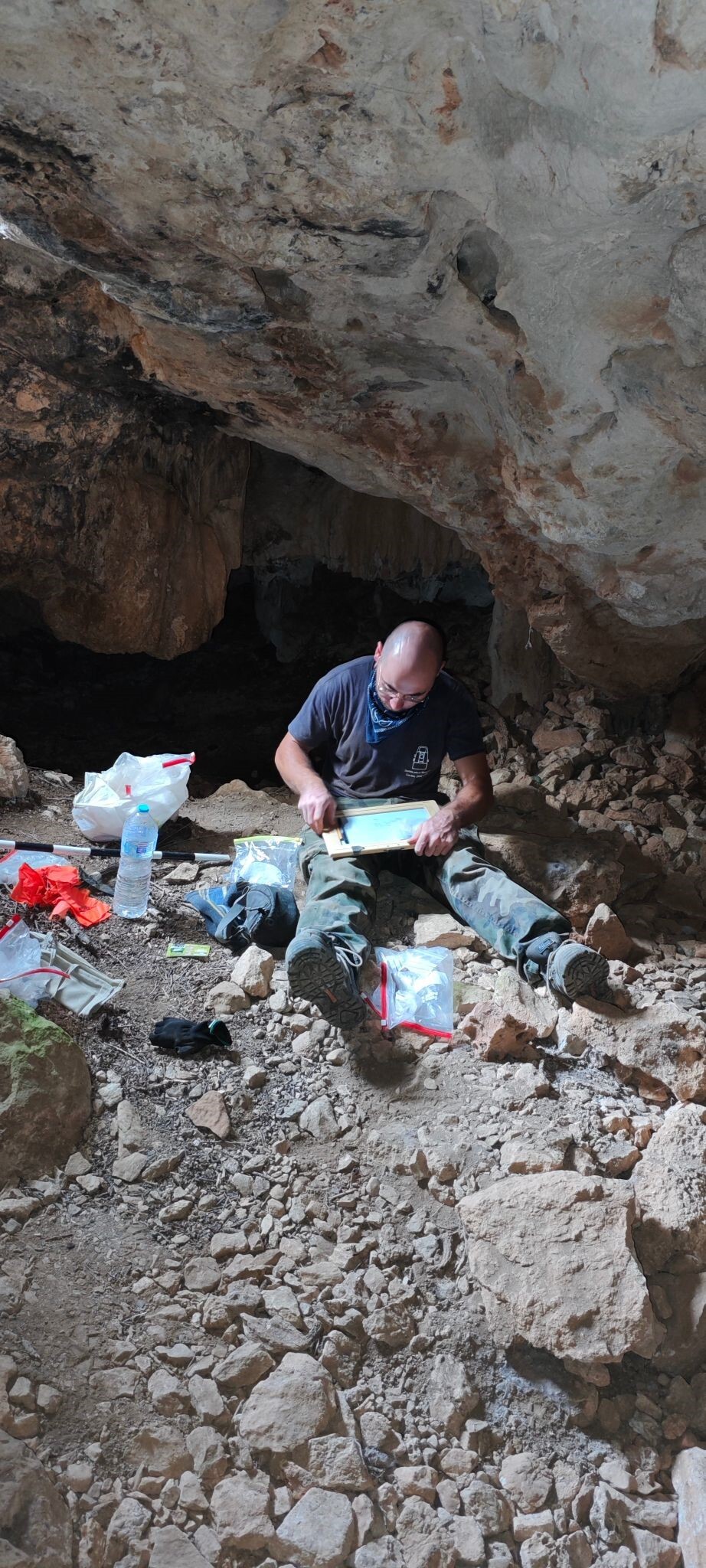
Luckily a known cave with possible archaeological remains was located along one of the mountain sides. With relative ease we managed to find its entrance and what we found was astonishing! The entrance opened up into a large chamber flanked by multiple smaller rooms and a pathway leading deeper underground. On many of the cave sides, there were beautifully formed stalagmites and stalactites. After entering and taking in what lay before us we started our work. Almost immediately, we found sherds and bones scattered on the floor. Going further into one of the side rooms we found even more material, especially multiple teeth which could possibly be human. Sadly we also discovered modern material and in many places the ground was visibly disturbed, meaning we weren’t the first to come to this cave in search of archaeological remains. Nonetheless, we continued exploring the cave. Reaching the lowest part, we found several stone piled structures which had to be human-made, on which lay even more bones we suspect to be human. Meaning we most likely had found several human graves! Our best interpretation is that these burials date all the way back to several thousands of years ago and because of the conditions inside the cave have been preserved amazingly well. After properly recording and collecting all our findings, we emerged from the cave overjoyed at what we had found.
Concluding remarks
In the end, the extensive surveys informed us a lot about how people in the past used the surrounding hills and mountains, gave us new areas of research to explore and for me was an amazing experience to be a part of!
For further information and new updates on this archaeological research you can follow the Villa Son Sard project on Instagram and Facebook (@villaSonSard) or check the website under research projects of the Faculty of Archaeology of the University Leiden.



0 Comments