
Archaeology at the Edge of the World: Exploring the Material Remnants of Human Exploration on Svalbard (Spitsbergen)

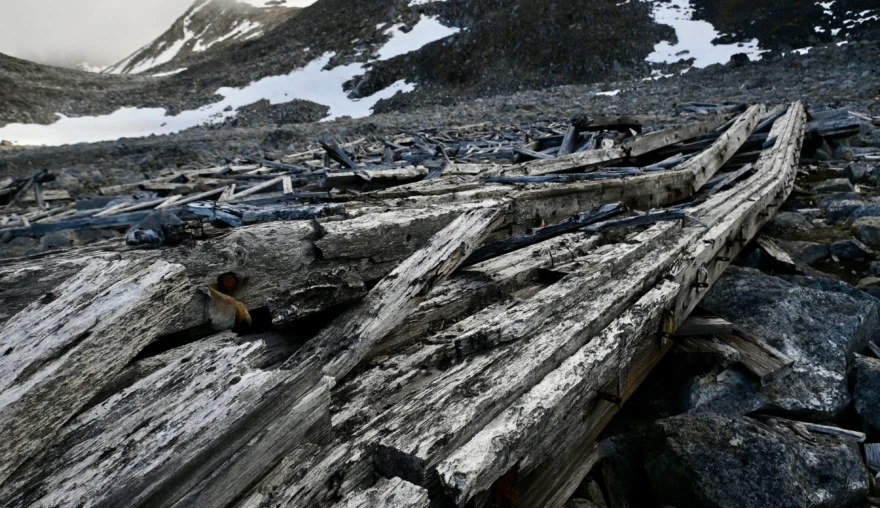
27 years after Dutch band BLØF performed the world’s northernmost concert on the island of Utre Norskøya (Het Bløf Archief, 2010), this recent Leiden graduate walked in their footsteps. But this was not the first time history had been made here – Utre Norskøya, along with a number of other sites in the area, saw centuries of human activity and continues to (poorly) conceal evidence of such exploits on its surface. At 79° 51' 11.99" north, such a storied past may seem unexpected; as will become clear below, however, this is characteristic of the entire island group now known as Svalbard (formerly Spitsbergen), and its discovery in 1596 was only the beginning of human exploration at the edge of the world. In this blog, I will recount some of the interesting archaeological remains I encountered while travelling along the northwestern coast of Svalbard, from whaling to polar expeditions.
Part one: walking over the backs of whales
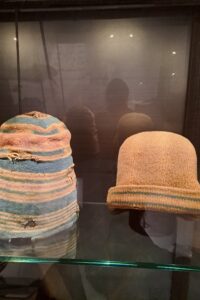
As will be familiar to most Dutch readers, explorer and sailor Willem Barentsz led the first verified expedition to encounter the archipelago now known as Svalbard (Laven, 2014). With the goal of finding a passage to the east that avoided the long journey around the African continent, Barentsz led three Polar Expeditions in 1594, 1595, and 1596. Though the first of these expeditions was successful enough to feed hope at achieving this goal, the ultimate difficulty of navigating arctic waters was underscored in the second expedition when the passage they had originally found was now completely frozen over. In fact, a barrel placed the previous year by captain Jan Huygen van Linschoten was entirely invisible; this barrel came to symbolise their perceived failure, and was eventually immortalised in the popular nursery rhyme ‘Jan Huygen in de Ton’ (van Zantwijk, 2016). Nevertheless, a third voyage was planned the following summer. This expedition is perhaps the best known, not only for its discovery of this polar archipelago (named ‘Spitsbergen’ by the crew, after its distinctive mountain peaks), but also for its bitter conclusion on the island of Novaya Zemlya where Barentsz and his crew were forced to survive an entire winter in the freezing Arctic. Though they managed to return home come spring, Barentsz himself would never touch Dutch soil again as he passed away in the first week of their return voyage. While their original aim was never achieved, their journey and particularly its disastrous end have gone down in history. Researchers have been able to gain immense insight into the experience of these sailors, through the personal diary of crewmember Gerrit de Veer, as well as the exceptionally preserved archaeological material on these sites. They tell a story of endurance, perseverance, and endless curiosity in the face of unknowable circumstances.
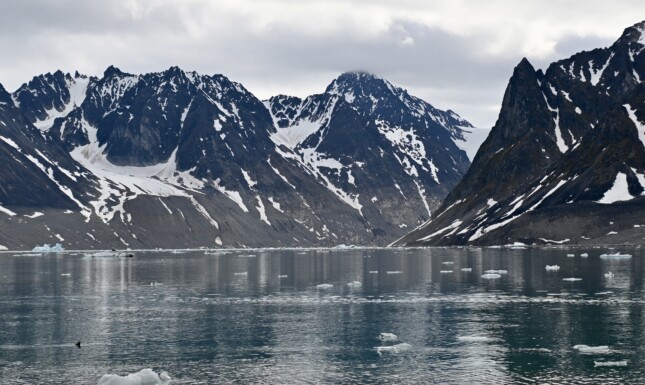
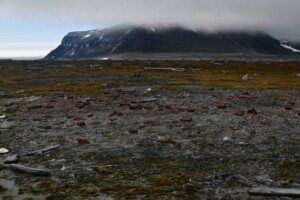
Though an alternative passage to the east was never found, reports of the discovery of Svalbard and particularly the vast numbers of whales it was home to quickly spread throughout Europe, fuelling an explosion of whaling expeditions in subsequent decades. Whales were reported as being so abundant that “you could cross the sea jumping from one whale to the other” (Pol, 2022). The primary value of whale hunting lay in their blubber, which could be rendered into oil — an important resource at the time. This rendering was performed on location, following a successful catch. The remains of the ovens which were used for this purpose (‘blubber’ or ‘try’ ovens) can still be seen in several different locations across Svalbard, with a particularly high concentration in the old Dutch town of Smeerenburg (‘Blubber Town’). Not only was this location used for the processing of whale blubber, whaling families lived in Smeerenburg the entire summer season, and remains of their homes can be seen on the surface just metres from the shoreline.
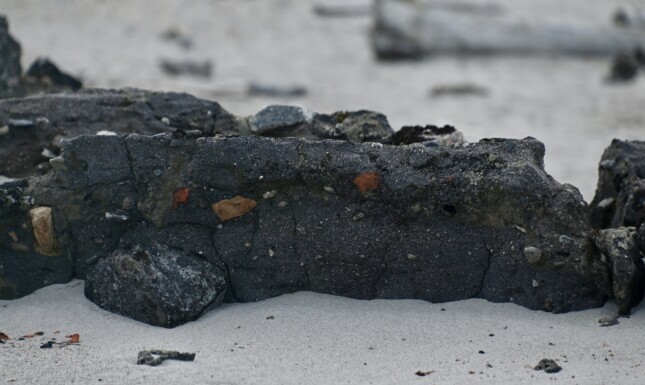
As can be seen in the images below, the remains of the blubber ovens are made up primarily of blubber cement, consisting of whale oil, sand, and gravel forming the basis of what was once a larger structure (Dunnell, 2026).
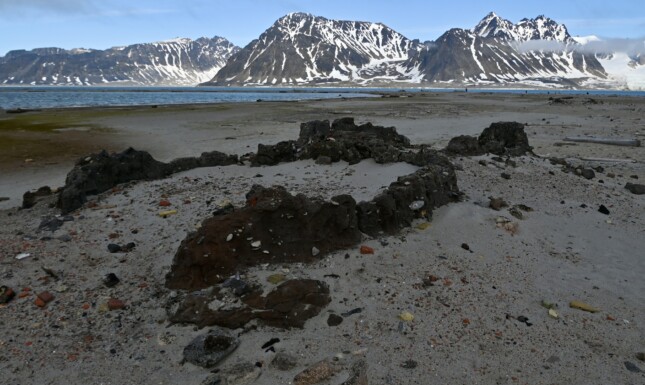
- Figure 4: Examples of the remains of blubber ovens, on Gravneset (left)
- figure 5 and at Smeerenburg (right) (photos by Rob Roggema)
- Figure 6: Close up of the remains of a blubber oven; Smeerenburg, Svalbard (photo by Rob Roggema)
Dutch dominance in the arctic whaling industry contributed to their broader economic power in Europe in the 17th century, as one of the primary suppliers of lamp oil and whalebone (for e.g. corsets, hoop skirts). Even today, many English words for arctic phenomena have Dutch origins, including ‘iceberg’, and ‘walrus’ (Birkhold, 2019). This dominance may explain the continued and relatively widespread Dutch presence this far north, exemplified by the town of Smeerenburg; despite the difficult conditions, surviving here was well worth the money.
This is further demonstrated by the extensive presence of whalers’ graves across the archipelago; not only was whaling a dangerous activity which often resulted in death, but the conditions in which they were forced to survive could be an even more effective killer. Archaeological research has put forth scurvy as a potential leading cause of death among whaler skeletons excavated across Svalbard (Loonen et al., 2019). These graves can be encountered on almost every shoreline in northwestern Svalbard, with some even placed inside former blubber ovens; despite the immense risk involved, scores of sailors returned to the arctic each summer in search of fortune.
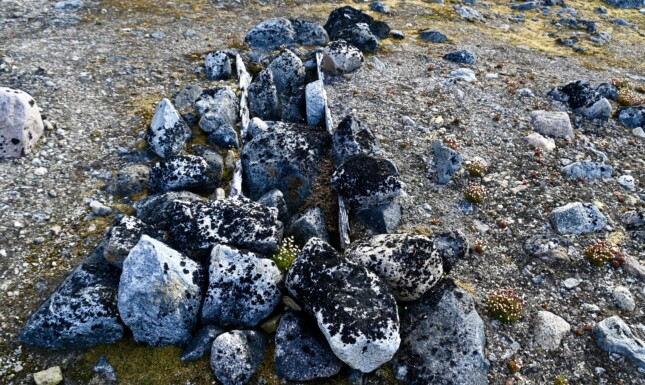
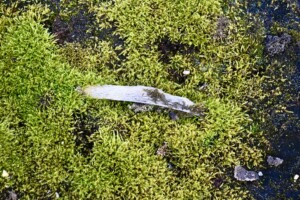
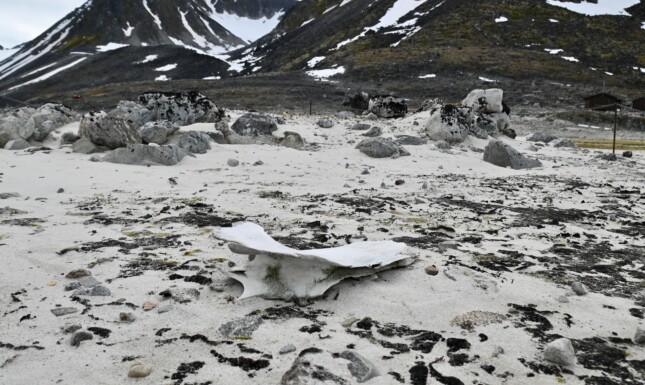
Graves were often shallow, dug into hard, frozen ground. As the permafrost melts and refreezes, expanding the earth, they are quickly pushed to the surface. Even now, bones and coffin wood can be seen sticking out of the ground in several locations, exposed to the elements. As a result of climate change, this exposure is accelerating and having permanent consequences. In order to prevent further erosion and potential loss of historical data, multiple rescue excavations have taken place and continue to be conducted; Leiden researchers George Maat and Menno Hoogland excavated 50 graves at Utre Norskøya in 1980, as part of the Groningen Arctic Centre’s ‘Smeerenburg Project’ led by Louwrens Hacquebord (Loonen et al., 2019). In recent years, further excavations have been conducted by Lise Loktu of the Norwegian Institute for Cultural Heritage Research (Radley, 2025).
Part two: 99 hot air balloons
On Svalbard, 17th century remains of the whaling industry are often found mere metres away from more recent parts of history. Locations considered beneficial as departure points for whale hunting, turned out to be similarly ideal departure points in the early 20th century for a different kind of expedition: to the north pole. In 1925, Roald Amundsen was officially the first person to reach the north pole, in a zeppelin flight from Ny-Ålesund (Svalbard) to Alaska (Royal Museums Greenwich, n.d.). He was not the first to attempt this feat, however, and the remains of others’ failed tries are left remarkably preserved on the surface of northwestern Svalbard’s coastline.
In 1897, Swede Salomon August Andrée was the first to attempt an expedition to the north pole not via ‘land’ (ice) but through the air (Oceanwide Expeditions, n.d.). For this purpose, he selected a hot air balloon, constructed in the bay of Virgohamna on the island of Danskøya, directly across from the remains of Smeerenburg on the opposite shore. Virgohamna itself had also been used for the rendering of whale blubber, and the remains of Andrée’s hot air balloon mooring can be found amongst blubber ovens and whaler’s graves. Tragically, not only did Andrée’s team fail to reach the north pole, they did not survive their journey; their remains would be discovered over 30 years later, with the cause of their deaths a mystery to this day.
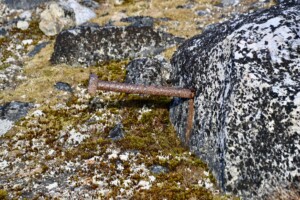
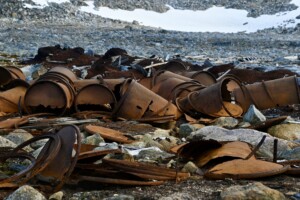
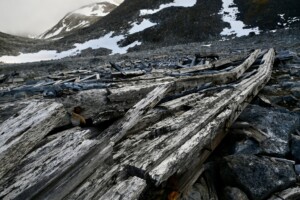
Inspired by Andrée’s efforts, American journalist Walter Wellman proceeded to attempt a similar flight over the north pole in 1906 (Diesen & Fulton, 2007). Wellman had previously attempted to do so using dog sleds as well as motorised sleds, but now viewed a zeppelin as the method with the highest potential for success. The remains of the hangar he constructed to build this zeppelin, as well as extensive waste materials from the required hydrogen production, can be seen covering large parts of Virgohamna where he too decided to depart. Unlike his earlier counterparts, Wellman managed to avoid death and turned his airship back when he encountered danger.
After these and other failed expeditions, Roald Amundsen and Umberto Nobile were the first to successfully reach the north pole in their airship Norge. Despite the ever-present risk of death as evidenced by several disastrous previous attempts by others, the human drive to explore even in the most unbearable environments continued to persevere. Separated by over a century, these polar explorers shared this endless drive with the whalers whose graves surrounded them; whether the reward be money or fame, they were willing to endure freezing cold, unforgiving landscapes, fear, pain, and death, to get it.
References
Birkhold, M. H. (2019, July 10). The myth of Blubber Town, an arctic metropolis. The Public Domain Review. Retrieved 2 August 2026, from https://publicdomainreview.org...
Diesen, J. A., & Fulton, N. (2007). Wellman’s 1906 polar expedition: The subject of numerous newspaper stories and one obscure film. Polar Research, 26(1), 76–85. https://doi.org/10.1111/j.1751...
Dunnell, T. (2026, July 29). Smeerenburg blubber ovens in Amsterdam Island. Atlas Obscura. http://www.atlasobscura.com/pl...
Het Bløf Archief (2010, December 10). BLØF - Documentaire BLØF komt boven. [Video]. YouTube. https://www.youtube.com/watch?...
Laven, A. (2014, March 25). IN BEELD: Walvisvaart. Historisch Nieuwsblad. https://www.historischnieuwsbl...
Pol, P. (2022, October 1). Spitsbergen: The whalers graveyard of Smeerenburg. Take Me North. Retrieved 2 August 2026, from https://www.takemenorth.com/
Radley, D. (2025, March 10). Ancient whalers’ graves in Svalbard are vanishing as permafrost melts. Archaeology News Online Magazine. https://archaeologymag.com/202...
Royal Museums Greenwich (n.d.). Roald Amundsen: Polar explorer. Retrieved 2 August 2026, from https://www.rmg.co.uk/stories/...
Oceanwide Expeditions (n.d.). The flight of the Örnen: Andrée’s 1897 arctic balloon expedition. Retrieved 2 August 2026, from https://oceanwide-expeditions....
van Zantwijk, B. (2016, October 6). Jan Huygen in de ton. Herkomst van Volksgebruiken. https://bertvanzantwijk.com/20...





0 Comments