
Forgotten Barrows: Excavating a funerary landscape in Noord-Limburg

If you pay close attention while walking through nature in the Netherlands you may be able to spot Bronze- and Iron Age gravemounds, often multiple close together, forming what archaeologists call an urnfield.
These small earthen mounds are some of the most common and instantly recognisable remnants from prehistory in the Netherlands. Most of these gravemounds are protected heritage sites which means they are not allowed to be excavated, however recently two new urnfields were discovered in the North of Limburg. These are not protected monuments (yet) which gives us the unique opportunity to conduct an excavation.
Forgotten Barrows
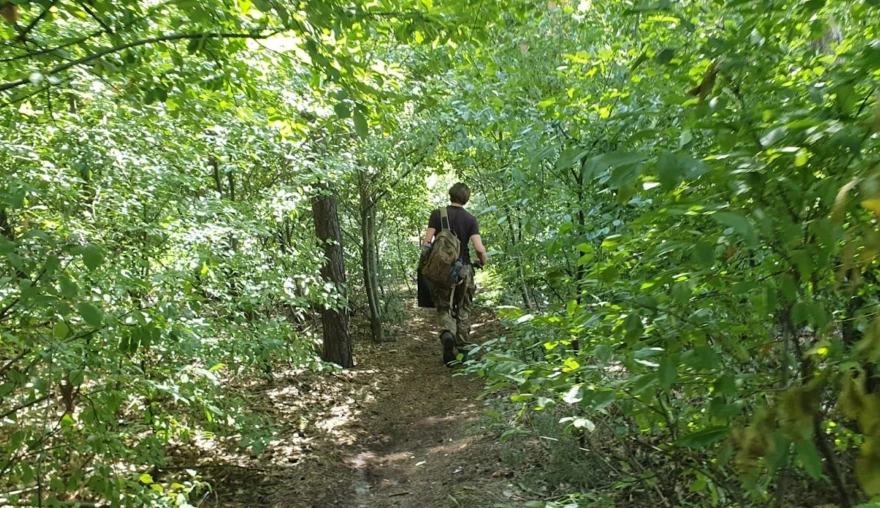
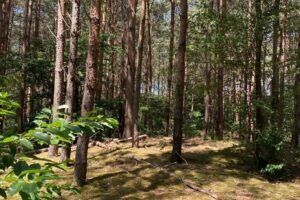
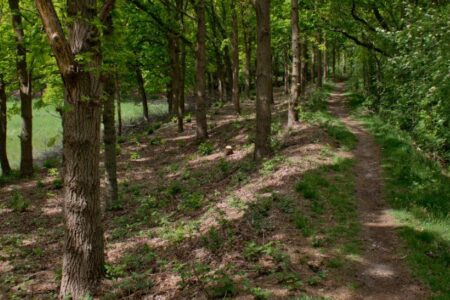
The name of the project is: ‘Forgotten Barrows’ chosen because the urnfields were unknown to archaeologists and the municipality. They were discovered by a local amateur archaologist who found them while studying an elevation map of the area. Of course the local people in Limburg did already have stories of urns, and even a bronze situla being found in these locations. The urnfields are located in forested plots between farmlands and outside of villages only able to be reached by dirt paths. These places that were once some of the most visible and important places in the landscape now lay forgotten hidden by trees and bushes. The main goal of this project is to preserve the funerary landscape and to bring back meaning and purpose to these forgotten barrows through public outreach. Once people can visit these places to see and to learn something this will bring back movement and meaning to the urnfields.
Another important goal is for students to be taken on fieldwork and be taught how to conduct this type of excavation. I was lucky enough to be a part of the fieldwork this year, so this is what we did, what we found and what our days looked like.
A day in the life at Venlo-Zaarderheiken
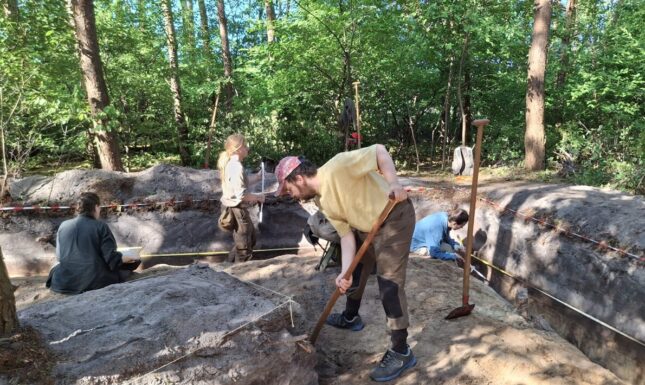
We are still in the first week of fieldwork and in my trench we are working hard when we hear that the other group has found a grave. At the foot of one of the mounds a concentration of cremated remains was discovered. We all stand around to look at the remains as they are carefully bagging the pieces which are already out of the soil. The rest of the remains are left in situ and covered with tarp to be excavated the following day. We ask how we can differentiate between tree roots which are also light in color and burnt bone and are told that bone is more porous. Our mound as well as all the others have robbing pits in them. These are recently dug by grave robbers who would go around urnfields in the late 19th to early 20th century and dig up the urns from these mounds.
A day in the life at Baarlo-de Bong
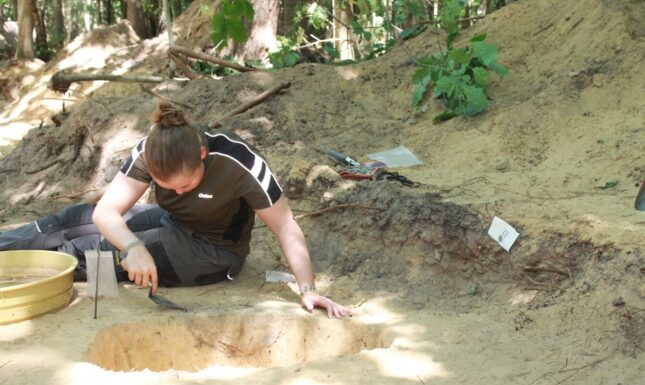
We experienced the hottest july 1st ever measured in the Netherlands; it reached a temperature of 36 degrees in Limburg! To beat the heat we went to the site an hour earlier meaning we arrived around 07:00. It is the final week and everyone knows what to do by this point; we all independently continue working. I start working on digging to the final level of our trench. The mound I am excavating was cut trough the middle by a path so we used this to our advantage and created a profile of the entire cross section of the mound. In the days before we found a lot of charcoal throughout the mound as well as a flint flake so we are being extra careful in case we find anything else (spoiler: we did not get lucky).
The first half of our day consists of digging and shaving to create a nice, clean profile (and mostly sweating in the searing sun). By making a profile section you can study the stratigraphy of the mound; this revealed a mound body on top of a prehistoric soil formation which confirms that we are looking at an actual grave monument constructed in the Bronze- or Iron Age. The rest of the afternoon we spent drawing our profile in the shade. Back at the accommodation everyone needs to cool down, so we take the cars to get icecream and jump in the Meuse.
Next year
Next year there will be another field season at this site where students and staff will work together on learning even more and hopefully doing even more interesting finds. After the excavations are finished these sites are going to be transformed into places that are more accessible to the public so one day everyone can enjoy this unique view of our past.



0 Comments